
July 18 Codex VI: The Form Endures
A surreal vision at sea. A man confronts a monument to a debased, digital culture, only to watch it dissolve and be impossibly reborn – revealing a profound and absurd paradox at the heart of reality.
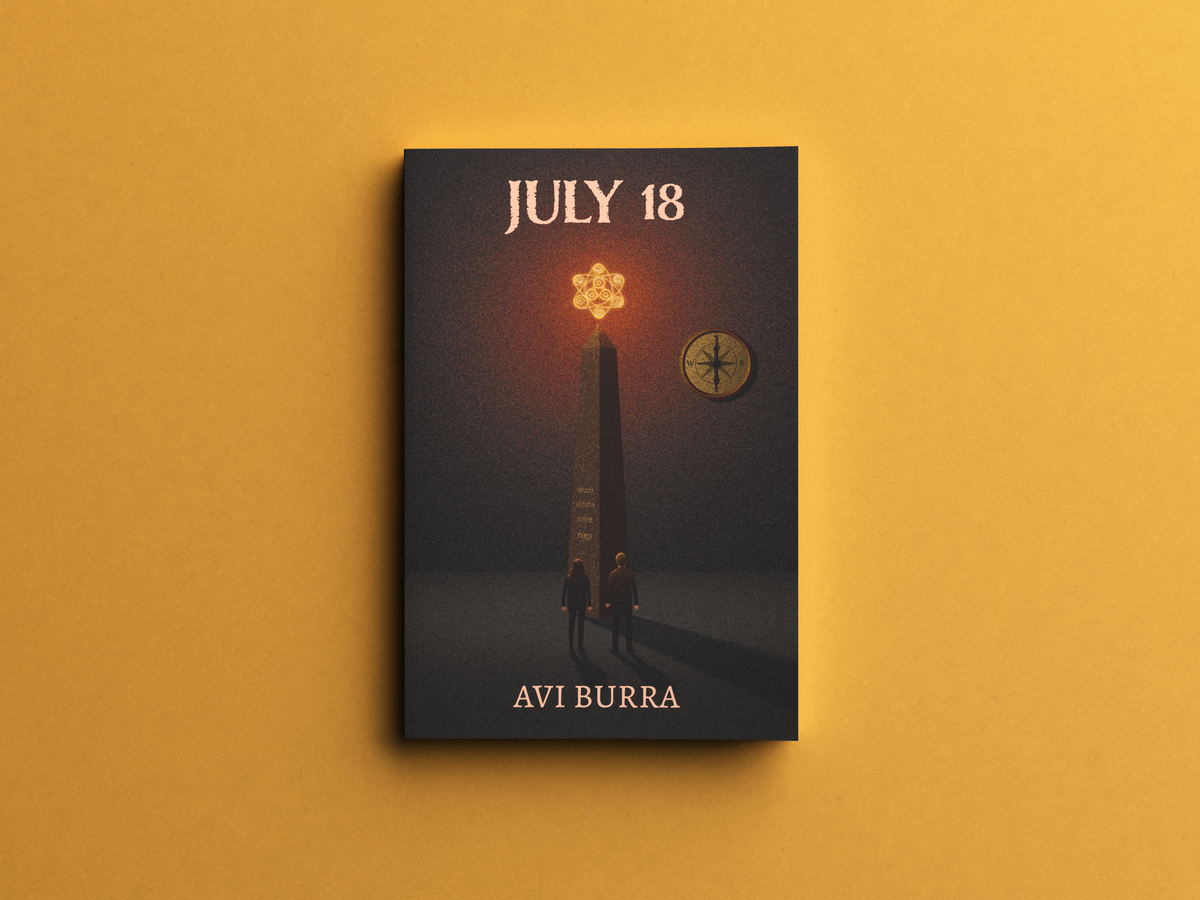
This fragment is a pure distillation of the novel's surrealist heart. It is a journey into the uncanny valley where form and substance, the real and the unreal, wage a silent, absurd war.
Oliver felt a gentle, irresistible pull, a current that was not in the water but in his own will. He took a step toward the shore, but his foot did not touch the black sand. Instead, he lifted, his body becoming weightless. He began to glide forward, a few feet above the surface of the pitch-black ocean, moving smoothly and effortlessly toward the distant ship.
The journey was unnervingly placid. There was no wind, no sound but the faint, almost imperceptible whisper of his own movement across the glassy water. The ship grew larger as he approached, its details resolving with a preternatural clarity. He could see the grain of the heavy, oaken planks, the texture of the thick, coiled ropes, the intricate carvings on the prow. It was a perfect, silent artifact, a vessel that seemed to be waiting for a story.
He was about fifty feet away when he first noticed something was wrong. The texture. The wood grain wasn't quite right. It didn't swirl and knot in the way real wood did. It was composed of a series of fine, perfectly horizontal lines. He glided closer, his curiosity now a sharp, focused point.
The planks, he now saw, were not made of wood at all. They were long, rectangular blocks of pure, solid color. The "grain" was just a subtle variation in the shading. They were pixels. Massive, elongated pixels, stacked and arranged to form the perfect illusion of an ancient galleon.
A sense of unease began to creep over him. He instinctively pulled his perspective back, rising higher above the water to see the whole image at once, the way one steps back from a painting in a museum.
And then he saw it. The full, sickening truth of the image resolved itself with a jolt of pure, intellectual revulsion.
The colors. The cartoonish lines. The specific shades of brown and beige. They were not random. The pixels formed a picture. The unmistakable, vapid, and infuriatingly familiar face of a cartoon ape. It wore a small, stupid, multi-colored propeller hat, and its expression was one of profound, algorithmically generated boredom.
It was an NFT of a bored ape. It was a monkey jpeg.
The desecration was absolute. Here he was, in this ocean at the edge of his own consciousness, trying to pass this impossible test and instead, he was being confronted with the very symbol of the shallow, speculative grift he despised. It was a violation.
He hung there, suspended above the black, glassy water, a furious spectator to the absurdity. He expected something to happen, a battle, a storm, some grand, dramatic event. But the ocean remained perfectly still. The ship simply floated, a silent monument to a debased culture.
Then, a single sound. A soft, wet fizz.
One of the long, rectangular pixel-planks on the ship’s hull detached itself. It didn't fall. It simply floated away from the structure, hung in the air for a moment, and then slowly descended until it touched the surface of the water. The moment it made contact, it dissolved with that same, soft, effervescent hiss, like an Alka-Seltzer tablet dissolving in a glass of black water.
Another plank detached. Then another. They followed the same slow path, floating away from the hull and dissolving into nothingness. The ship was un-building itself, a quiet, orderly, and deeply unsettling process of entropy.
A chorus of soft, fizzing sounds now filled the air, a gentle, static-like crackle. As Oliver listened, the random noise began to coalesce, the overlapping hisses starting to form a pattern, a whisper. It was a sound that was both external and internal, a memory being spoken by the world around him.
He watched, horrified and mesmerized, as the pixelated ship came apart, plank by hissing plank. The cartoon ape’s face disintegrated, its vapid expression dissolving into the black water. The propeller hat came apart, its bright colors bleeding into the darkness. The entire structure, the symbol of his anger, was being systematically erased, and all that remained was this single, haunting, and incomprehensible message.
The final plank floated down, touched the water, and fizzed into oblivion.
And then, there was nothing. The ship was gone. All that was left was the vast, empty, black ocean, and the lingering, spectral whisper of two small words that now held the weight of the entire world.
Oliver hung there, suspended in the void, a solitary witness to the erasure. He was unsure of what to feel – loss, or relief. Numbness, perhaps? The ship, for all its profane absurdity, had been something. A structure. A form. Now, there was only the endless, featureless expanse of the somehow calm, yet menacing water.
But the emptiness did not last.
From the depths of the black sea, a new form began to rise. It was not a pixel. It was a single, long plank of real, solid wood, dark and heavy with water. It broke the glassy surface without a sound, followed by another, and then another. They were ancient timbers, weathered and scarred, streaked with the ghostly white of sea salt and the dark green of old algae. They were planks from a hundred different shipwrecks, a flotilla of wooden memories rising from a liquid graveyard.
They began to move.
With a series of soft, resonant clicks and thuds, the wooden planks started to assemble themselves. There was no visible force guiding them, no unseen hand. They simply moved with a quiet, efficient purpose, fitting together with the perfect, interlocking precision of a master shipwright's work. It was a slow, deliberate reconstruction. The hull took shape, its curving lines a testament to a forgotten age of craftsmanship. The deck was laid, plank by weathered plank. The tall, central mast rose from the center, a single, solid piece of ancient oak that seemed to groan with the memory of a thousand storms.
Oliver watched, his sense of numbness slowly being replaced by a sense of awe. This was the true ship. This was the real thing, the authentic vessel, being resurrected from the dead. What could this mean? He would have to wait and watch. Reza's words surfaced in his mind. The essence is in the function, not the form. The pixelated "form" of the NFT had been destroyed, and now the true, functional "essence" of the ship was being reborn from real, solid substance. He felt a surge of triumphant understanding. This was the answer.
The final plank, a small, curved piece for the prow, rose from the water and slid perfectly into place with a soft, final thud.
The ship was complete. It floated before him, a magnificent, tangible thing, its real, sea-worn timbers a testament to endurance and authenticity.
And then he saw it.
His happy realization gave way to a feeling of utter dismay. His gaze, which had been focused on the individual planks, now pulled back, taking in the whole of the vessel. The colors. The textures. The specific patterns of the salt-bleached wood and the dark, water-stained grain. They were not random.
The deep, dark knots in the oak had been arranged to form the empty eye sockets of a skull. The swirling, lighter grain of the teak planks above it formed the unmistakable, cartoonish lines of a jaw. The green streaks of algae on the hull were a perfect, contemptuous rendering of a ridiculous, multi-colored propeller hat.
The substance had been replaced, from the digital to the physical, from the unreal to the real. But the form, the repugnant, vapid image of the bored ape, had endured. It was still there, an indelible imprint in the grain, a joke told by the very fabric of reality. The ship was no longer just a monkey jpeg. It was now a real, solid, seaworthy vessel that was, impossibly, still a monkey jpeg.
Oliver hung there, suspended above the black, placid ocean, the paradox floating before him, taunting him. He felt a deep bout of cognitive whiplash, his brief moment of understanding completely annihilated by the stubborn, absurd reality of the thing. He had witnessed a miracle of reconstruction, only to find the new creation was a perfect replica of the original profanity. It was a joke, and he was the butt of it.
Read the previous Fragments here:
July 18 Codex I: The Phantom Limb of Meaning
July 18 Codex II: The Cage Around Your Sovereign Mind
July 18 Codex III: A Tree Whose Shade You Will Never Sit In