
July 18 Codex III: A Tree Whose Shade You Will Never Sit In
Following the Warrior's warning of a digital cage, a Philosopher offers a different path. A new fragment from July 18 explores how sound money doesn't just build wealth – it builds a world of lasting beauty, patience, and peace.
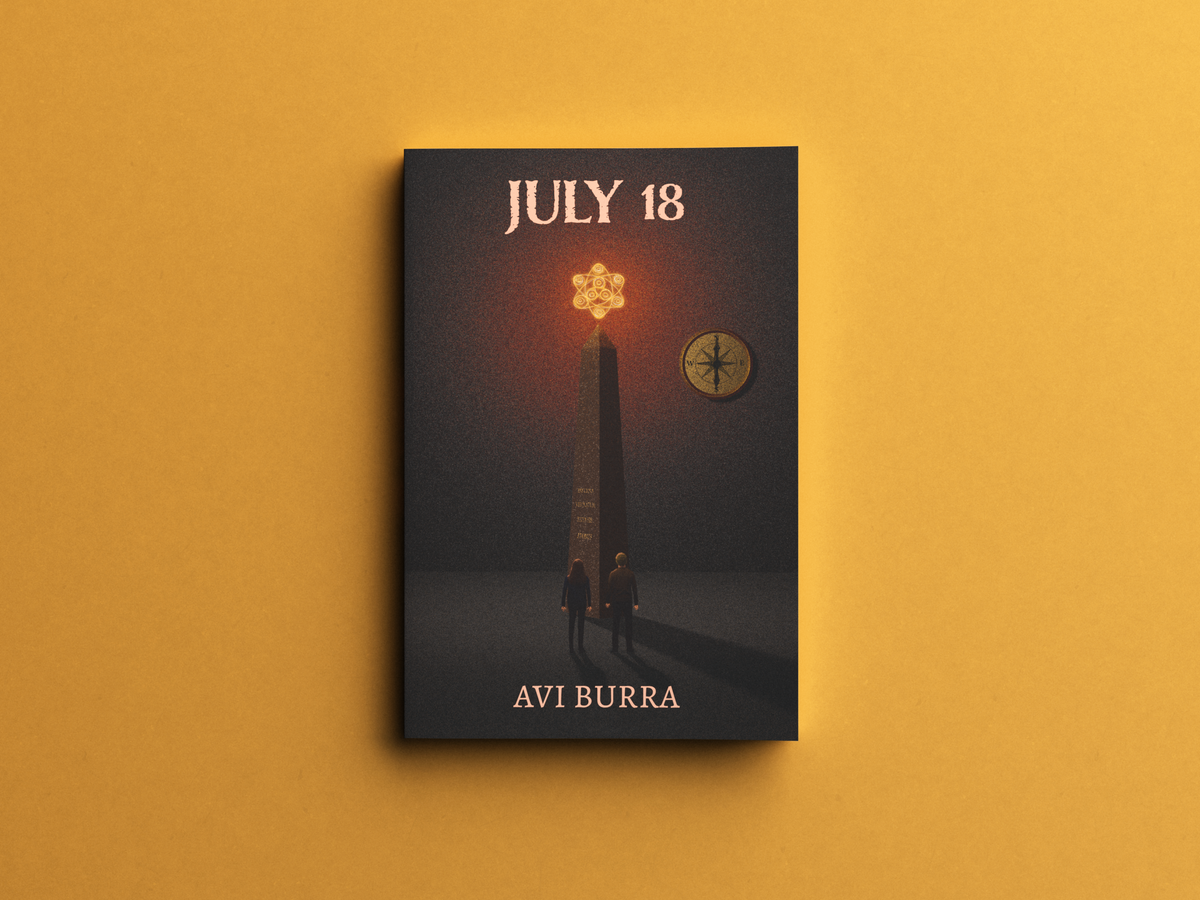
n the last fragment, we heard the Warrior's sermon on the nature of control. Now, we hear its necessary counterpoint: the Philosopher's speech on the nature of freedom. Two sides of the same sovereign coin, at the heart of July 18.
The crowd began to flow back into the small, hot room. Oliver found his seat again, the chair still warm. He took a final sip of his whisky, the peaty smoke a familiar comfort. He didn’t know what Mateo Kovač would talk about, but he had a sinking feeling that another journey was waiting for him in the darkness behind his eyes.
Vince returned to the stage as the last of the audience settled in. The room fell into a respectful hush.
“Gideon Reed showed us the fire,” Vince began, his voice calm and centered. “He showed us the necessity of the shield, the wall, the fortress. He spoke of the world we must defend ourselves from. Now, I’d like to introduce a friend who will speak about the world we are trying to build. He is a master storyteller, an artist who has spent his life studying the things that last. From the vineyards of Croatia to the outback of his adopted Australia, he finds the signal in the noise. Please give a warm welcome to Mateo Kovač.”
A man in his late fifties walked onto the stage to a warm, appreciative applause. He was the complete opposite of Gideon. Where Gideon was a coiled spring of wiry, intense energy, Mateo was a figure of gentle, grounded warmth. He wore a comfortable-looking linen shirt and had a kind, lived-in face, framed by a cascade of graying hair and a warm, grandfatherly beard. He rested his hands softly on the lectern, as if greeting an old friend. He smiled, a genuine, easy smile that seemed to instantly lower the temperature in the room.
“Thank you, Vince. Thank you all,” he said, his voice a rich, pleasant baritone with a soft Australian accent. “My friend Gideon is a hard act to follow. He speaks with the fire of a man who has stared into the abyss. And he is right to do so. The world he described… the world of control, of surveillance, of violence, both overt and insidious… it is very real.”
He paused, letting his eyes drift over the crowd.
“But I am a filmmaker,” he continued, his smile returning. “And in filmmaking, we learn that the story is not just about the monster. The story is about what the characters do in the shadow of the monster. Do they despair? Do they hide? Or do they build something new? Something the monster cannot touch?”
He leaned forward slightly, his tone becoming more intimate, as if he were sharing a secret. “We live in an age of noise. A frantic, screeching, twenty-four-hour news cycle of fear and consumption. A fiat culture. It shortens our vision. It makes us anxious, reactive. It encourages us to consume rather than create, to flip rather than build. It is a culture that is, by its very design, ugly. Because it is not built to last.”
Oliver found himself leaning forward, captivated. Mateo’s voice was a soothing balm after Gideon’s abrasive truths.
“But what if,” Mateo said softly, “we could change the fundamental signal that governs our society? What if we introduced a form of money that is not based on debt and violence and endless printing, but on proof-of-work and verifiable scarcity? What happens to a people when their money is slow, patient, and incorruptible?”
He looked out at the audience, his eyes full of a genuine, infectious hope.
“I will tell you what happens. Their time preference lowers. The frantic noise of the present begins to fade, and they start to hear the music of the future. A person who saves in a money that cannot be debased is a person who can think in terms of decades, not quarters. They can build a business that will outlive them. They can raise children in a stable home. They can plant a tree whose shade they will never sit in.”
“The world that Bitcoin builds is not a world of frantic, disposable ugliness. It is a world of beauty and permanence. It is a world of art that is meant to last for centuries, not just to be flipped for a profit next week. It is a world of architecture that is built to inspire our great-grandchildren. It is a world where war becomes an almost economic impossibility, because the state can no longer fund its violent ambitions through the silent theft of inflation. It must ask its citizens for the money directly, and citizens with a low time preference do not gladly pay for endless conflict.”
“Gideon spoke of a shield. And he is right. But Bitcoin is also a seed. It is the seed of a quiet, peaceful, and joyful revolution. A revolution not of anger, but of patience. A revolution that will not be televised, but will be built, block by block, by people who have chosen to build a world of lasting beauty…”
Mateo’s warm, calming voice began to warp, the edges of his words softening and stretching as if being pulled through water. Oliver blinked. The faces in the crowd around him started to lose their focus, melting into indistinct, blurry shapes.
He felt a deep, profound yearning for the world Mateo was describing. A world of peace, of art, of permanence. It was a world he felt he had known – for a brief period when he finally understood bitcoin from the Noncemeister – a world he had lost, a world he felt he was desperately unworthy of ever rejoining. The dissonance between Mateo's beautiful vision and his own ugly, internal state of chaos and guilt was a chasm, and he felt himself falling into it.
The dim lights of the back room at Pubkey faded, and the uncomfortable blue mist, cooler and more mysterious than ever, began to rise from the floor, ready to claim him once again.
Ugh. Oliver thought to himself as the was about to be consumed by the projection. I was really enjoying this talk.
The world dissolved. The sound of Mateo Kovač’s warm, hopeful voice stretched into a long, distorted drone and then vanished, replaced by an absolute emptiness. He was floating again, unmoored in the endless, ethereal blue. He had been desperate to return here just days ago, but now, having been pulled away from a moment of genuine connection and intellectual hope, the transition felt like an abduction.
Then he saw her, and all resistance melted away.